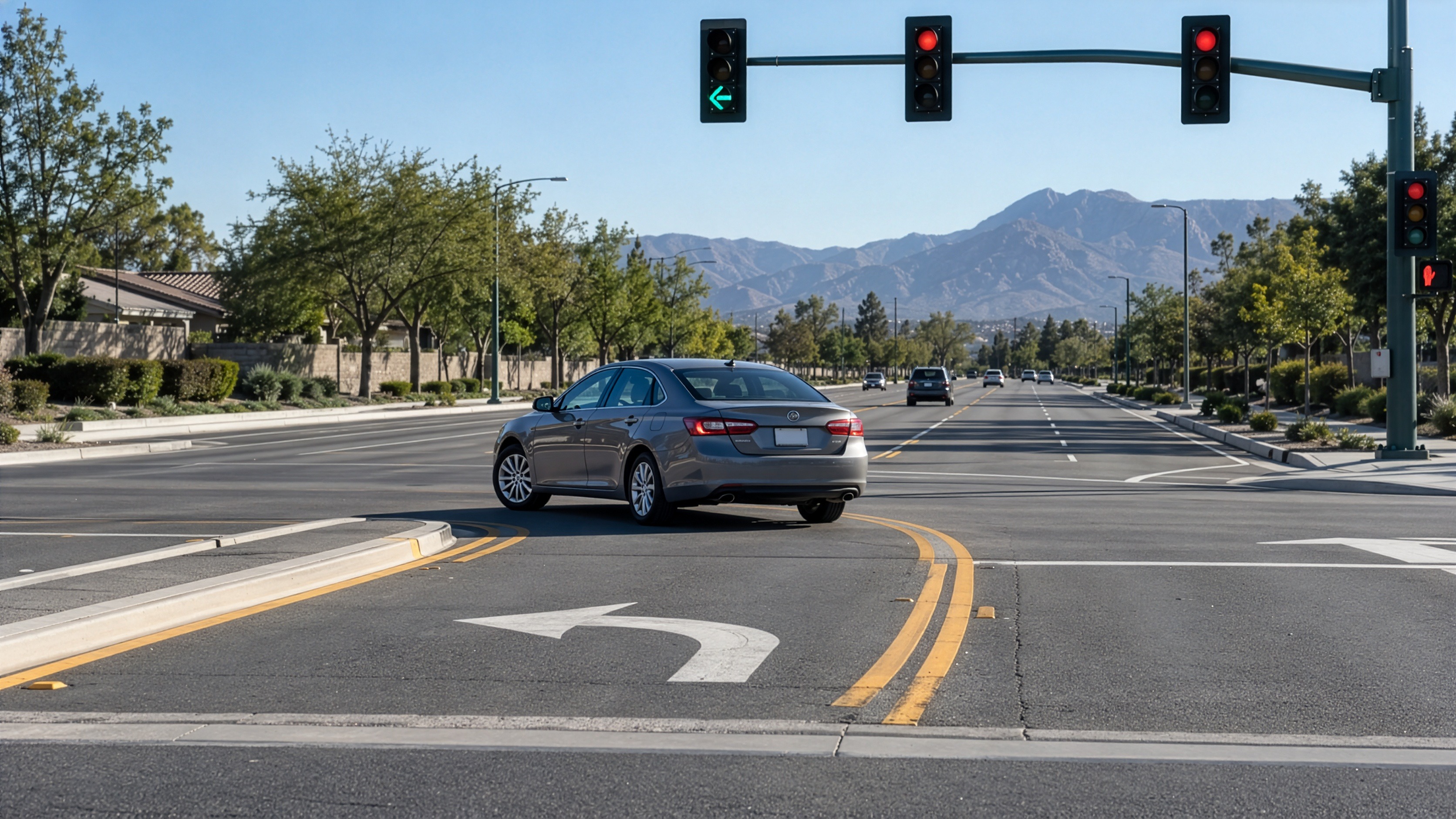
You miss your turn.
The next intersection is coming up, and it looks like there is enough room to turn around.
Can you legally make a U-turn?
Sometimes yes.
Sometimes no.
In Virginia, U-turns are allowed in some situations, but there are important restrictions involving intersections, signs, curves, hills, visibility, and highway driving.
The safest approach is to think about two things:
Is the turn legal here, and can I complete it without interfering with other traffic?
What Is a U-Turn?
A U-turn is a maneuver that changes your direction of travel so that you proceed in the opposite direction.
Instead of turning onto another road, you turn around and continue back the way you came.
Because the movement crosses or interacts with multiple traffic paths, drivers need more space and more awareness than they would for an ordinary turn.
Where Are U-Turns Allowed in Virginia?
Virginia law allows U-turns in some locations, but the rules depend on where you are driving.
Within cities, towns, and business districts of counties, a driver generally may not make a U-turn except at an intersection.
That means simply turning around in the middle of the roadway in one of those areas is generally not permitted.
Watch for No U-Turn Signs
If a sign says No U-Turn, the decision is easy.
Do not make the turn.
The Virginia Driver's Manual also notes that U-turns are treated as two left turns, so a No Left Turn sign can also prohibit a U-turn.
Drivers should check signs before beginning the maneuver rather than assuming the intersection allows it.
Do Not Make a U-Turn Where Visibility Is Limited
Virginia law prohibits U-turns on curves and near the crest of a hill or grade when another approaching driver would not be able to see your vehicle from at least 500 feet away.
This restriction makes sense.
A U-turn can place your vehicle across multiple lanes for several seconds.
If another driver cannot see you early enough, they may have very little time to react.
Never Make a U-Turn Just Beyond a Blind Hill
A hill can hide approaching traffic completely.
You may look in both directions and believe the road is empty simply because another vehicle is still below the crest.
By the time that vehicle becomes visible, your car may already be across its lane.
If your view is limited, continue driving until you reach a safer place to turn around.
Curves Create the Same Problem
A sharp curve can hide vehicles in much the same way as a hill.
If you cannot clearly see far enough in both directions, a U-turn is not worth the risk.
Waiting for a parking lot, side street, or intersection with better visibility is usually much safer.
What About Highways?
The Virginia Driver's Manual specifically warns drivers not to make U-turns on highways.
Highway speeds make the maneuver especially dangerous because approaching vehicles can cover distance very quickly.
Instead of attempting to cross multiple high-speed lanes, continue to an interchange or other lawful place where you can safely reverse direction.
You Still Have to Yield
A legal U-turn does not automatically give you the right-of-way.
You still need to yield to approaching traffic when required.
Virginia law generally requires drivers making left-turn movements to yield to oncoming vehicles that are close enough to create a hazard.
A U-turn creates an even larger movement than a normal left turn, so adequate space is essential.
Use Your Turn Signal
Before making a U-turn, signal your intention.
A turn signal gives surrounding drivers advance notice that your vehicle is about to change direction.
Even then, do not assume another driver understands exactly what you plan to do.
Check mirrors, blind spots, approaching traffic, pedestrians, and cyclists before beginning the maneuver.
Do Not Make the Turn From the Wrong Lane
Where a U-turn is permitted at an intersection, position your vehicle properly for the turning movement.
Do not suddenly cross from a right lane, shoulder, or other unexpected position.
A driver behind or beside you may not anticipate that movement.
Follow lane-use signs and pavement markings whenever they are present.
Make Sure You Have Enough Room
Not every vehicle can make a U-turn in the same amount of space.
A compact car may complete the turn easily while a pickup, SUV, van, or vehicle towing a trailer may require much more room.
Before starting, consider whether your vehicle can complete the maneuver without:
- backing up unexpectedly,
- climbing a curb,
- entering a shoulder,
- blocking multiple lanes,
- or forcing other drivers to stop suddenly.
What If You Cannot Finish the Turn?
A badly planned U-turn can leave a vehicle stopped sideways across traffic.
That is one reason you should not begin unless you are confident there is enough room.
If the space looks questionable, keep driving and find a safer location.
Do Not Use a U-Turn to Fix a Last-Second Navigation Mistake
Navigation systems can make drivers feel pressure to correct a missed turn immediately.
You may hear:
“Make a U-turn when possible.”
The important part is when possible.
Your GPS does not know every temporary traffic condition, visibility problem, sign, or hazard around you.
If the recommended maneuver looks unsafe or illegal, continue driving and allow the navigation system to recalculate.
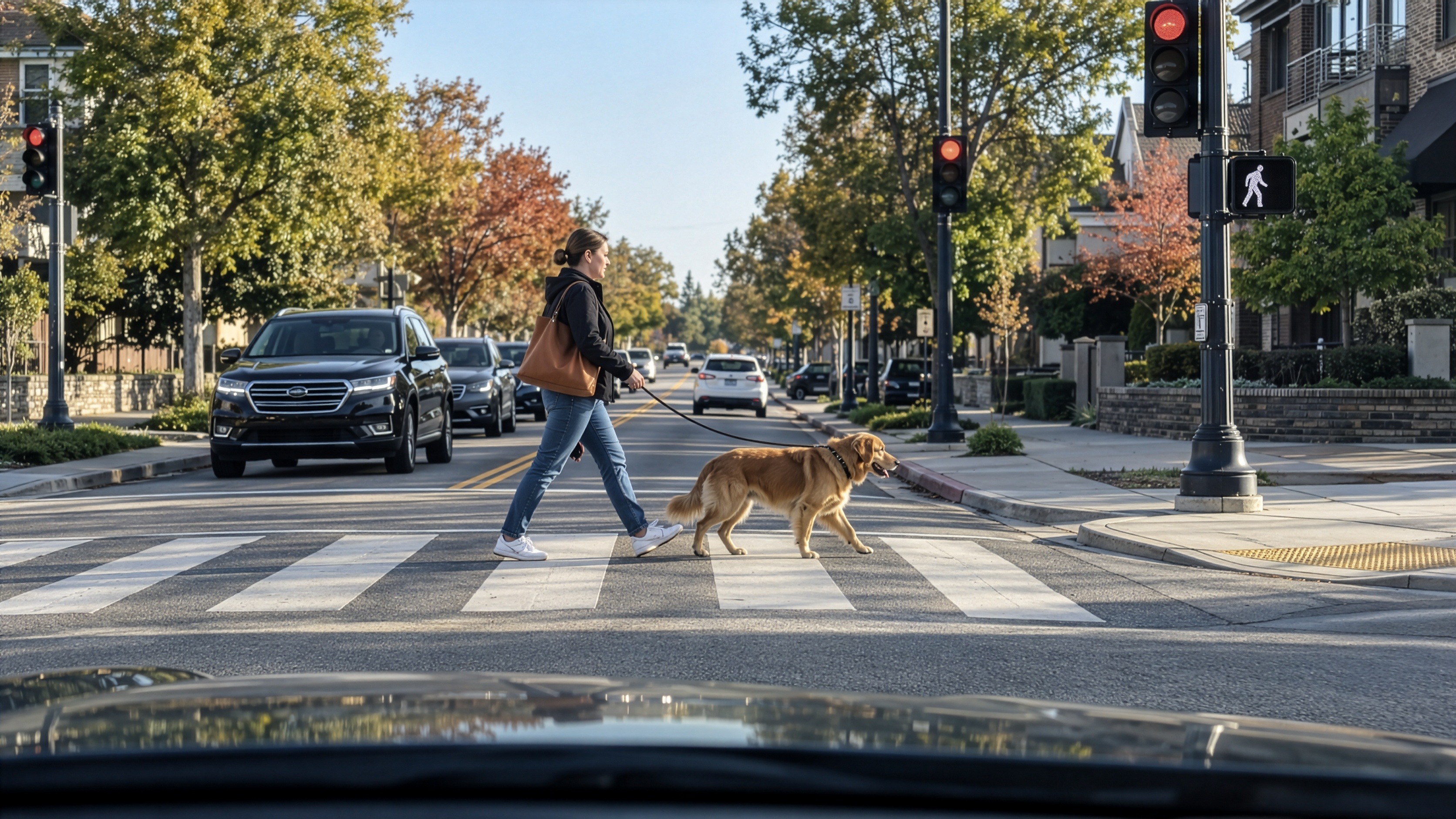
Watch for Pedestrians
At an intersection, drivers may become focused on opposing vehicle traffic and forget about pedestrians.
A U-turn can carry your vehicle through or near a crosswalk.
Before beginning the turn, make sure pedestrians and cyclists are clear of your path.
Be Careful Around Motorcycles
Motorcycles can be more difficult to see and may appear farther away than they really are.
Before making a U-turn across traffic, take an extra moment to confirm that an approaching motorcycle is not closer or traveling faster than you first thought.
Do Not Depend on Another Driver Waving You Through
A driver may stop and wave for you to make the turn.
That does not mean every lane is clear.
Another vehicle could be approaching beside or behind them.
Make your own observations before proceeding.
What About Turning Around in a Driveway?
Using a driveway or parking lot to reverse direction may sometimes be safer than attempting a U-turn in moving traffic.
But drivers still need to watch for:
- pedestrians on sidewalks,
- vehicles entering or leaving the driveway,
- private-property restrictions,
- and traffic when re-entering the roadway.
Do not create a new hazard simply because you are trying to avoid a U-turn.
Three-Point Turns Are Different
A three-point turn usually involves moving forward, backing up, and then moving forward again to reverse direction.
That requires even more time in the roadway than a normal U-turn.
It should only be attempted where traffic is light, visibility is good, and the maneuver can be completed safely and legally.
A busy road is generally not the place for it.
Sometimes the Best U-Turn Is No U-Turn
Drivers sometimes become focused on saving a minute or two.
But continuing to the next intersection, turning into a safe parking lot, or taking another block may be far easier than forcing a difficult maneuver.
If you are uncertain about visibility, signs, traffic, or available space, continue driving.
There will usually be another opportunity to turn around.
The Bottom Line
In Virginia, U-turns are legal in some situations, but they are not permitted everywhere.
Within cities, towns, and county business districts, they generally must be made at intersections.
They are prohibited where signs restrict them and where curves or hills prevent approaching traffic from seeing your vehicle from a safe distance.
Even when a U-turn is legal, you still need enough visibility, enough space, and enough time to complete it without interfering with other road users.
Missing a turn is inconvenient. Making a dangerous U-turn to correct it can create a much bigger problem.
Comments
No comments yet. Be the first to join the discussion.
Leave a Comment
Your email will not be displayed publicly. Comments are reviewed before publication.