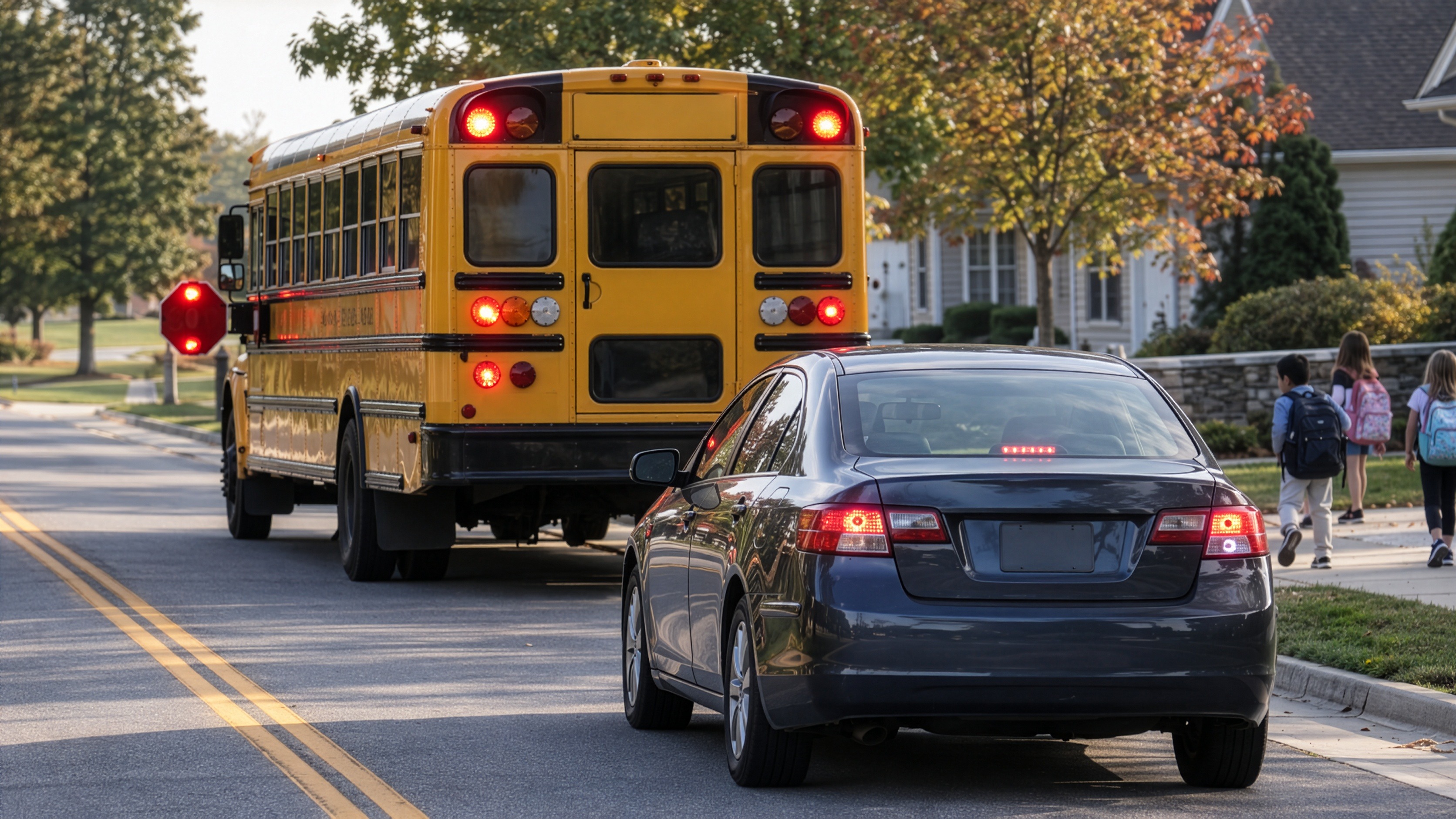
You are driving down the road when a school bus ahead begins flashing its lights.
Then the red lights come on and the stop arm swings out.
Do you stop?
What if you are coming from the opposite direction?
What if the road has four lanes?
What if there is a median?
School bus laws can become confusing quickly because the answer depends heavily on the type of road you are driving on.
But the basic safety principle is simple:
When a school bus is loading or unloading children, drivers need to slow down, pay attention, and stop when the law requires it.
What Do the Yellow Lights Mean?
When a school bus activates its yellow warning lights, it is preparing to stop.
That is your warning to slow down and prepare to stop as well.
Do not speed up to get around the bus before the red lights activate.
The purpose of the yellow lights is to give drivers advance warning that children may soon be entering or leaving the roadway.
What Do the Red Lights and Stop Arm Mean?
When the school bus displays flashing red lights and extends its stop arm, children may be entering or leaving the bus.
Drivers who are required to stop must remain stopped until the bus begins moving again or the warning signals are no longer activated.
Do not proceed just because you do not immediately see a child.
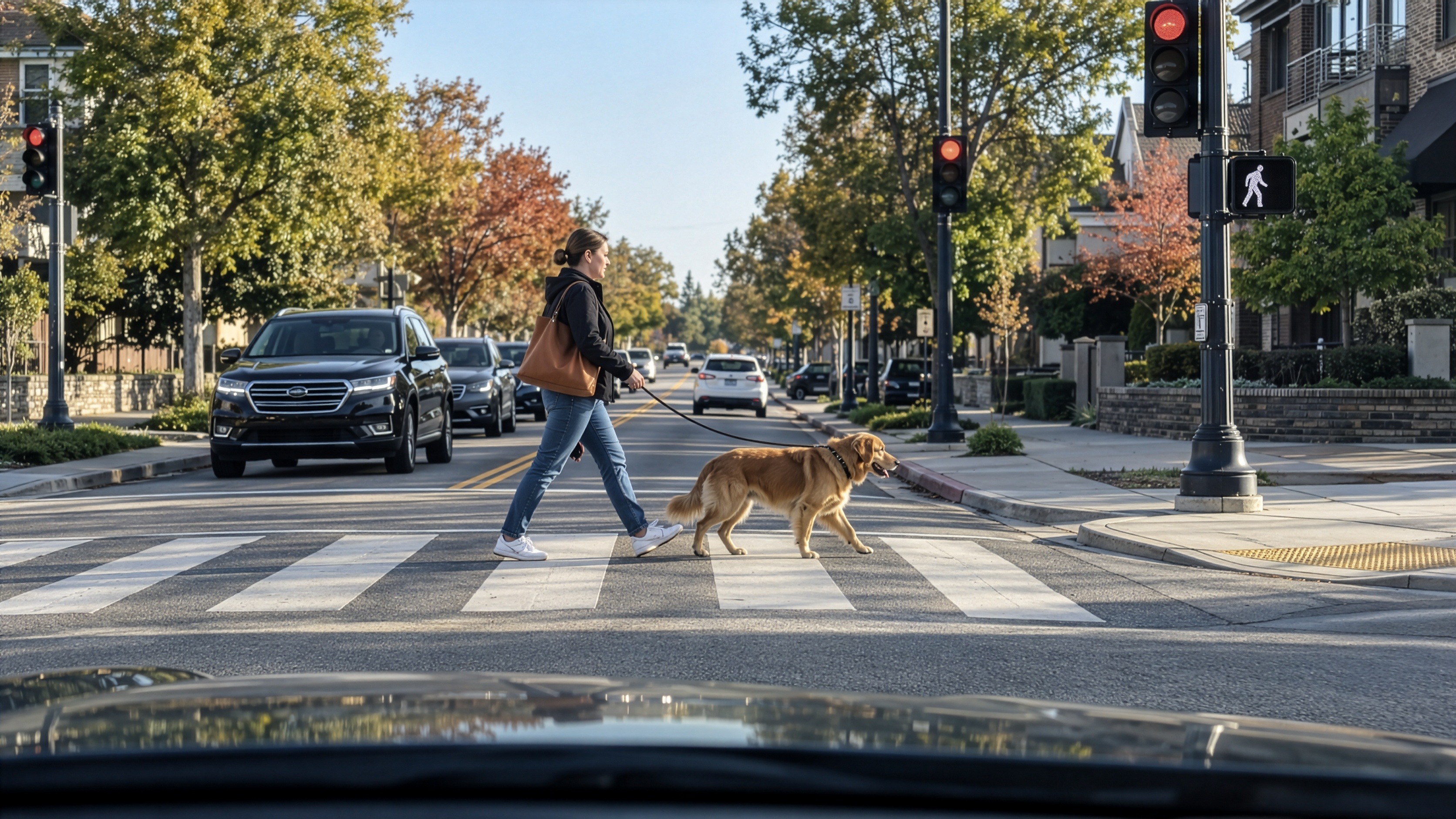
A student may still be crossing in front of the bus or approaching from somewhere you cannot see.
When Must Drivers Stop in Virginia?
Virginia law generally requires drivers approaching a stopped school bus from either direction to stop when the bus is loading or unloading children and displaying the required warning signals.
This applies on ordinary two-lane roads and many undivided multi-lane roads.
Drivers should stop at a safe distance and remain stopped until the bus is ready to proceed.
What About a Divided Highway?
This is where many drivers become confused.
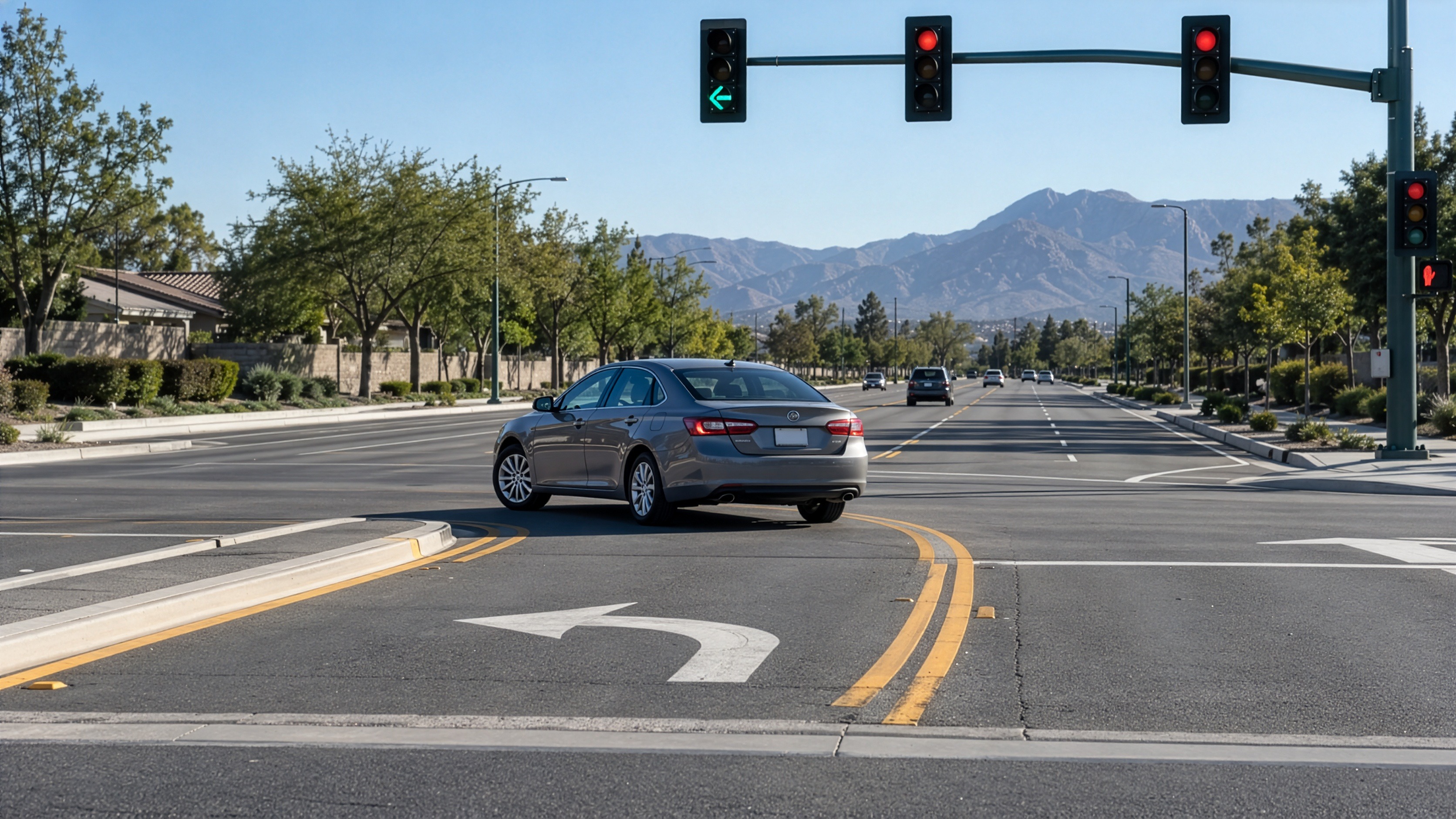
If you are approaching a stopped school bus from the opposite direction on a roadway that is separated by a median or physical barrier, you may not be required to stop.
The important distinction is whether the roadway is truly divided.
A painted center line is not the same thing as a physical median.
A center turn lane is also not necessarily the same as a divided highway.
If you are unsure whether the roadway qualifies as divided, use extra caution.
A Four-Lane Road Does Not Automatically Mean You Can Keep Going
Drivers sometimes assume that traffic moving in the opposite direction can continue simply because the road has multiple lanes.
That is not always true.
If the roadway is not physically divided, opposing traffic may still be required to stop for the school bus.
The number of lanes alone does not determine whether you may proceed.
Why Passing a Stopped School Bus Is So Dangerous
Children do not always behave predictably around traffic.
A child may:
- run across the road,
- drop something and turn back,
- walk in front of the bus where drivers cannot see them,
- cross from the opposite side of the road,
- or suddenly enter the roadway.
The bus itself can block your view of the child until the last moment.
That is why passing a stopped school bus is far more dangerous than simply passing a slow-moving vehicle.
Do Not Try to Beat the Red Lights
One of the worst decisions a driver can make is accelerating when a school bus begins slowing down.
You may think:
“I can get past before the stop arm comes out.”
That is exactly the kind of decision the yellow warning lights are designed to prevent.
When the bus signals that it is preparing to stop, slow down and prepare to stop instead of trying to get around it.
What If You Are Already Beside the Bus?
If you are already alongside the bus when its warning system activates, do not make a sudden or unsafe maneuver.
Continue cautiously if you are already committed to the movement, but do not accelerate simply to clear the bus faster.
The safest approach is to anticipate the stop early enough that you are not caught beside the bus when children begin moving.
Watch for Children Before the Bus Arrives
School bus safety does not begin only when the lights start flashing.
Drivers should also pay attention when they see children waiting near the roadway.
A child may step into the road before the bus arrives.
They may be distracted, talking with friends, or focused on the approaching bus instead of surrounding traffic.
Slow down early when approaching a group of children near a known bus stop.
Watch After the Bus Leaves Too
The danger is not necessarily over the instant the bus begins moving again.
A child may still be near the roadway after getting off the bus.
Someone may cross behind the bus.
Another vehicle may start moving unpredictably.
Continue paying attention until the area is clearly safe.
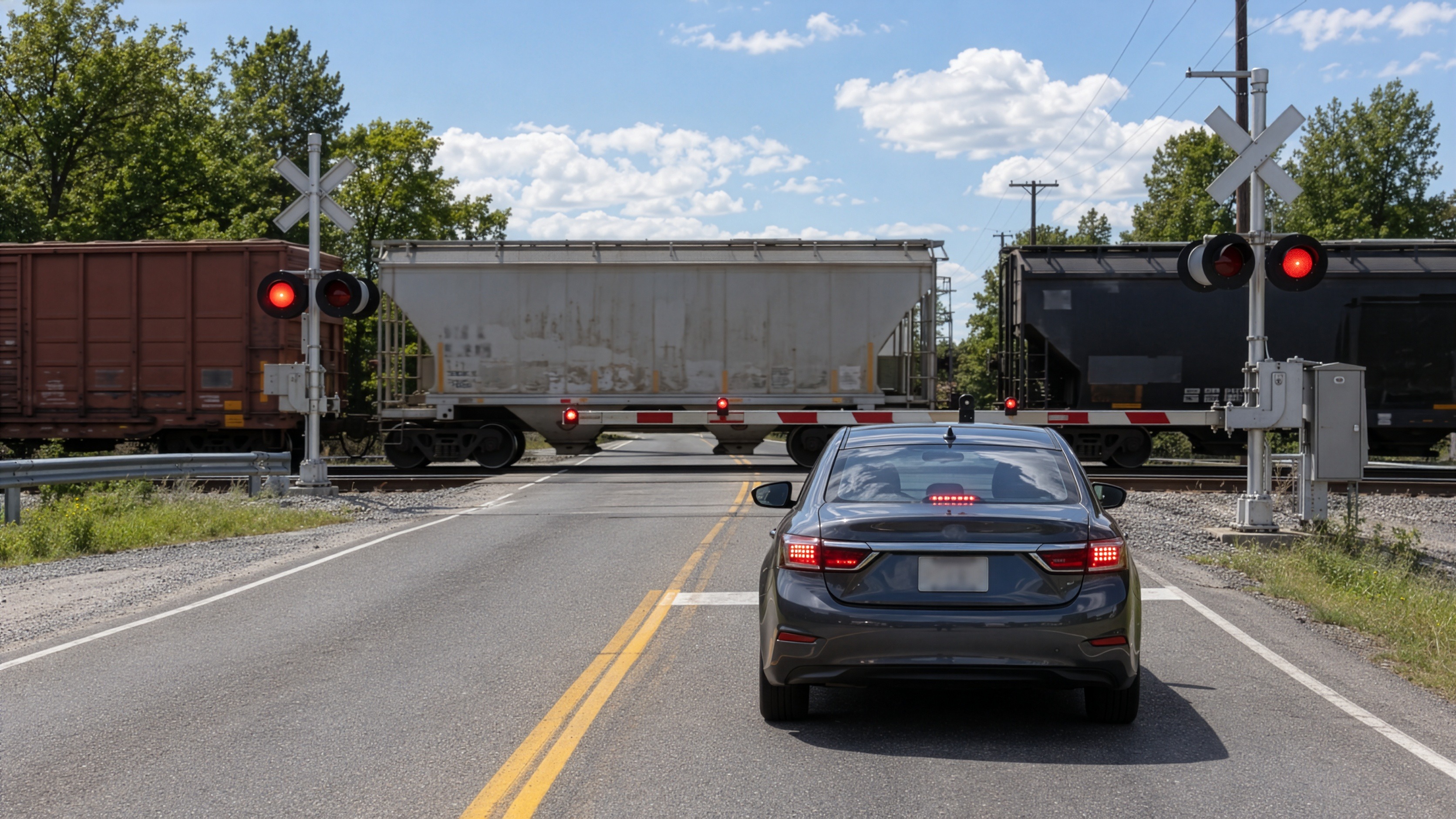
Do School Buses Always Stop at Railroad Tracks?
School buses generally have special rules for railroad crossings.
You may see a school bus stop at railroad tracks even when the crossing signals are not active.
If you are driving behind a bus approaching railroad tracks, expect it to stop.
Do not follow too closely.
Why Drivers Get This Rule Wrong
There are several common reasons:
- confusion about divided versus undivided roads,
- assuming multiple lanes automatically change the rule,
- not seeing the stop arm in time,
- impatience,
- distraction,
- or simply not remembering the law.
Unfortunately, misunderstanding the rule can put children in immediate danger.
Do Not Let Traffic Behind You Pressure You
If you are required to stop, stop.
Do not move simply because another driver is impatient or honking.
The person behind you may not see the school bus clearly or may not understand the road configuration.
Your responsibility is to obey the law and protect the people crossing the roadway.
What Should You Do When You Are Unsure?
If you are uncertain whether you are legally required to stop, slowing down and using extra caution is far safer than assuming you can continue at full speed.
The biggest risk at a school bus stop is not losing a few seconds.
It is failing to see a child entering the roadway.
The Bottom Line
School bus stop laws depend on the roadway configuration, especially whether the road is divided by a physical median or barrier.
But the safest habits are consistent:
- slow down when you see yellow lights,
- stop when required for flashing red lights and the stop arm,
- never rush around the bus,
- watch carefully for children,
- and remain patient until the bus and surrounding area are clearly safe.
The few moments you spend waiting behind a school bus are insignificant compared with the safety of the children getting on and off.
Comments
No comments yet. Be the first to join the discussion.
Leave a Comment
Your email will not be displayed publicly. Comments are reviewed before publication.