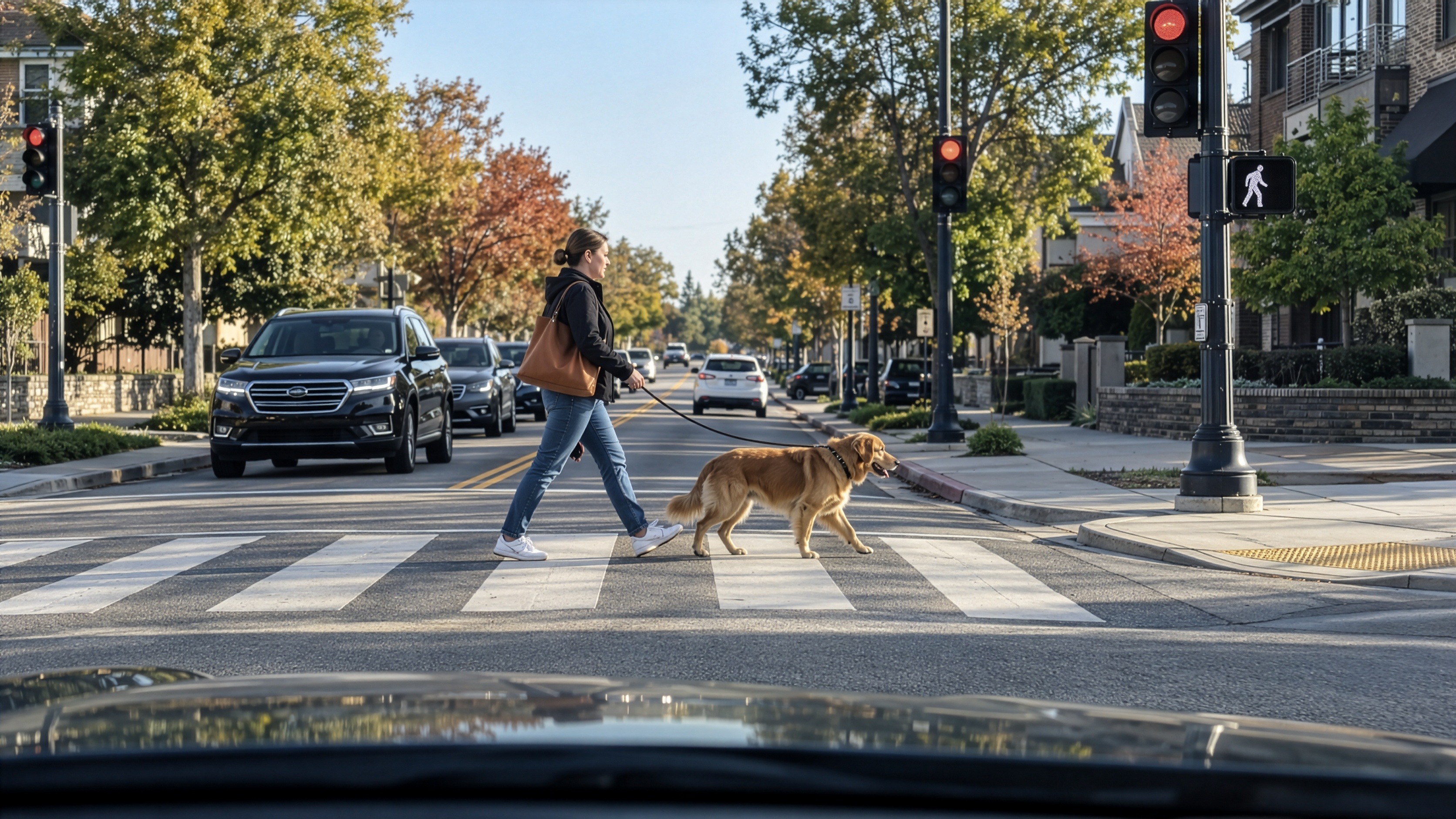
You are approaching an intersection when a pedestrian steps toward the crosswalk.
Do you always have to stop?
Does the pedestrian automatically have the right-of-way no matter what?
The answer is more complicated than many drivers think.
Drivers have important responsibilities around pedestrians, but pedestrians also have responsibilities of their own.
The key is understanding when a pedestrian is lawfully crossing and when a driver must yield or stop.
Crosswalks Are the Most Important Place to Pay Attention
At marked and unmarked crosswalks, drivers need to be prepared to yield to pedestrians who are crossing lawfully.
Virginia law requires drivers to yield to pedestrians crossing within certain crosswalk situations and to avoid passing another vehicle that is stopped for a pedestrian.
That means if a vehicle ahead of you has stopped at a crosswalk, do not assume it is stopping for no reason.
There may be a pedestrian you cannot see.
Not Every Crosswalk Has Painted Lines
One of the most common misunderstandings is assuming a crosswalk only exists when white lines are painted across the road.
At many intersections, crosswalks can exist even without pavement markings.
That means drivers should not rely only on painted lines to determine whether pedestrians may be crossing legally.
Pedestrians Do Not Have Unlimited Right-of-Way
A pedestrian cannot simply step into the road at any moment and expect every vehicle to stop instantly.
Pedestrians also have a responsibility not to enter the roadway so suddenly that a driver who is already too close cannot reasonably stop.
This is one reason both drivers and pedestrians need to pay attention to each other.
Right-of-way rules do not eliminate the need for common sense and caution.
Drivers Should Expect Pedestrians at Intersections
Intersections are natural crossing points.
Drivers should be especially alert when:
- turning right,
- turning left,
- approaching a stop sign,
- approaching a traffic signal,
- entering or leaving a parking lot,
- or crossing a sidewalk area.
Pedestrians may be approaching from directions that are easy to miss, especially when a driver is focused on other vehicle traffic.
Right Turns Are a Common Conflict Point
Right turns can create a dangerous situation when drivers concentrate only on traffic coming from the left.
A driver waiting to turn right may look left for a gap while a pedestrian is entering the crosswalk from the right.
This is especially important when turning right on red.
Before making the turn, check the crosswalk first, then approaching traffic, then the crosswalk again before moving.
Left Turns Can Be Just as Dangerous
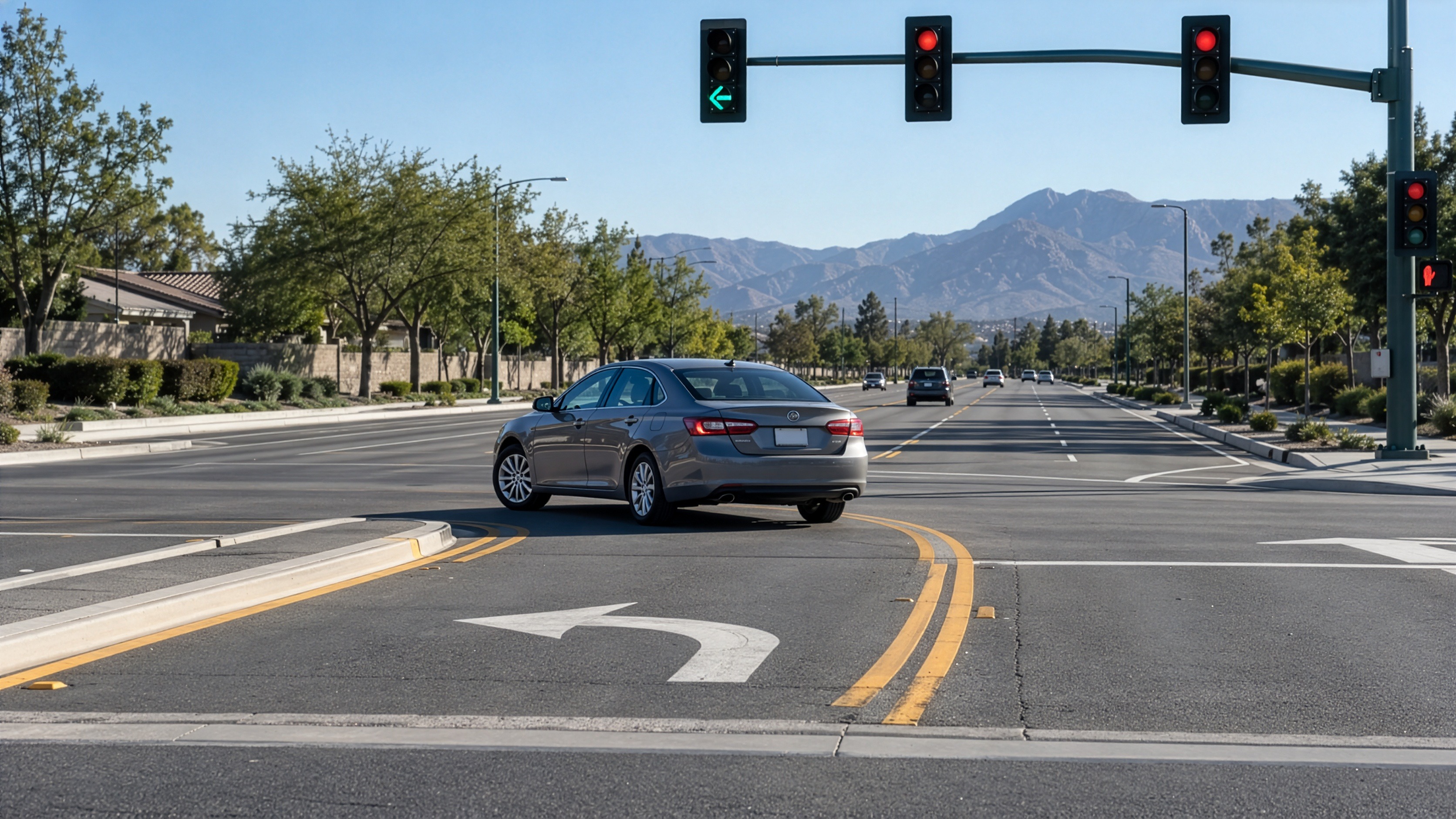
Drivers making left turns may be focused on finding a gap in oncoming traffic.
Once the gap appears, they may turn quickly without noticing a pedestrian crossing the street they are entering.
A safe turn requires checking both vehicle traffic and pedestrian movement.
Never Pass a Vehicle Stopped at a Crosswalk
If another vehicle has stopped at or near a crosswalk, use extreme caution.
The vehicle may be stopped because a pedestrian is crossing in front of it.
Passing that stopped vehicle can put you directly into the pedestrian's path.
This is particularly dangerous on multi-lane roads where one vehicle may block your view.
Children Require Extra Attention
Children may not accurately judge vehicle speed or distance.
They may also:
- run into a crosswalk,
- chase a ball,
- follow another child without looking,
- or enter the street from behind a parked vehicle.
Drivers should reduce speed and increase attention near schools, neighborhoods, playgrounds, and other places where children are likely to be present.
Older Pedestrians May Need More Time
Not everyone crosses the road at the same speed.
Older adults, people using mobility devices, and people with disabilities may need more time to cross.
Do not start moving simply because a traffic signal changes if a pedestrian is still lawfully completing the crossing.
Watch for Pedestrians in Parking Lots
Parking lots combine vehicles and pedestrians in very close proximity.
People may walk between parked cars, push shopping carts, carry packages, or move unpredictably.
Drivers should keep speeds low and expect pedestrians to appear from areas with limited visibility.
Driveways and Sidewalks Matter Too
When entering or exiting a driveway, parking garage, or business entrance, drivers often cross a sidewalk.
That sidewalk may already be occupied by pedestrians.
Do not roll across the sidewalk while looking only for traffic in the roadway.
Check the pedestrian area before moving through it.
Pedestrians Also Need to Follow Signals
Pedestrian signals exist for a reason.
When a pedestrian signal indicates not to begin crossing, pedestrians should not enter the roadway simply because traffic appears light.
Following pedestrian signals makes movement at intersections more predictable for everyone.
What About Jaywalking?
Pedestrians crossing outside a crosswalk may have different legal obligations depending on the location and roadway conditions.
But even when a pedestrian is crossing improperly, drivers should still avoid a collision whenever reasonably possible.
Being legally correct does not make hitting someone acceptable.
Safety should always come first.
Nighttime Changes Everything
Pedestrians can be much harder to see at night, especially when wearing dark clothing.
Drivers should reduce speed when visibility is poor and be particularly careful near:
- intersections,
- bus stops,
- entertainment districts,
- schools,
- and residential areas.
Headlight glare, rain, and poorly lit roads can make detection even more difficult.
Do Not Assume Eye Contact Means It Is Safe
Drivers sometimes believe a pedestrian has seen them because the person appears to look toward the vehicle.
That assumption can be wrong.
The pedestrian may be looking past you, may misjudge your speed, or may expect you to yield.
Do not base your decision entirely on perceived eye contact.
Phones Distract Pedestrians Too
Distracted walking can create problems just like distracted driving.
A pedestrian looking at a phone may enter a crossing without fully checking traffic.
Drivers should recognize that possibility and be prepared to respond.
At the same time, pedestrians should avoid letting devices prevent them from seeing and hearing approaching traffic.
Right-of-Way Does Not Replace Awareness
One of the most dangerous attitudes in traffic is:
“I have the right-of-way, so the other person has to stop.”
That may describe the legal rule, but it does not guarantee the other person will obey it.
Drivers and pedestrians should both remain alert enough to avoid a collision when someone else makes a mistake.
The Bottom Line
Pedestrians do have important right-of-way protections, especially at crosswalks and intersections.
But those protections do not mean pedestrians can enter traffic without regard for approaching vehicles.
Drivers should slow down, watch crosswalks carefully, yield when required, and never pass a vehicle stopped for a pedestrian.
Pedestrians should follow signals, cross carefully, and avoid stepping into traffic when vehicles are too close to stop safely.
Right-of-way rules matter, but awareness from both sides is what prevents the collision.
Comments
No comments yet. Be the first to join the discussion.
Leave a Comment
Your email will not be displayed publicly. Comments are reviewed before publication.