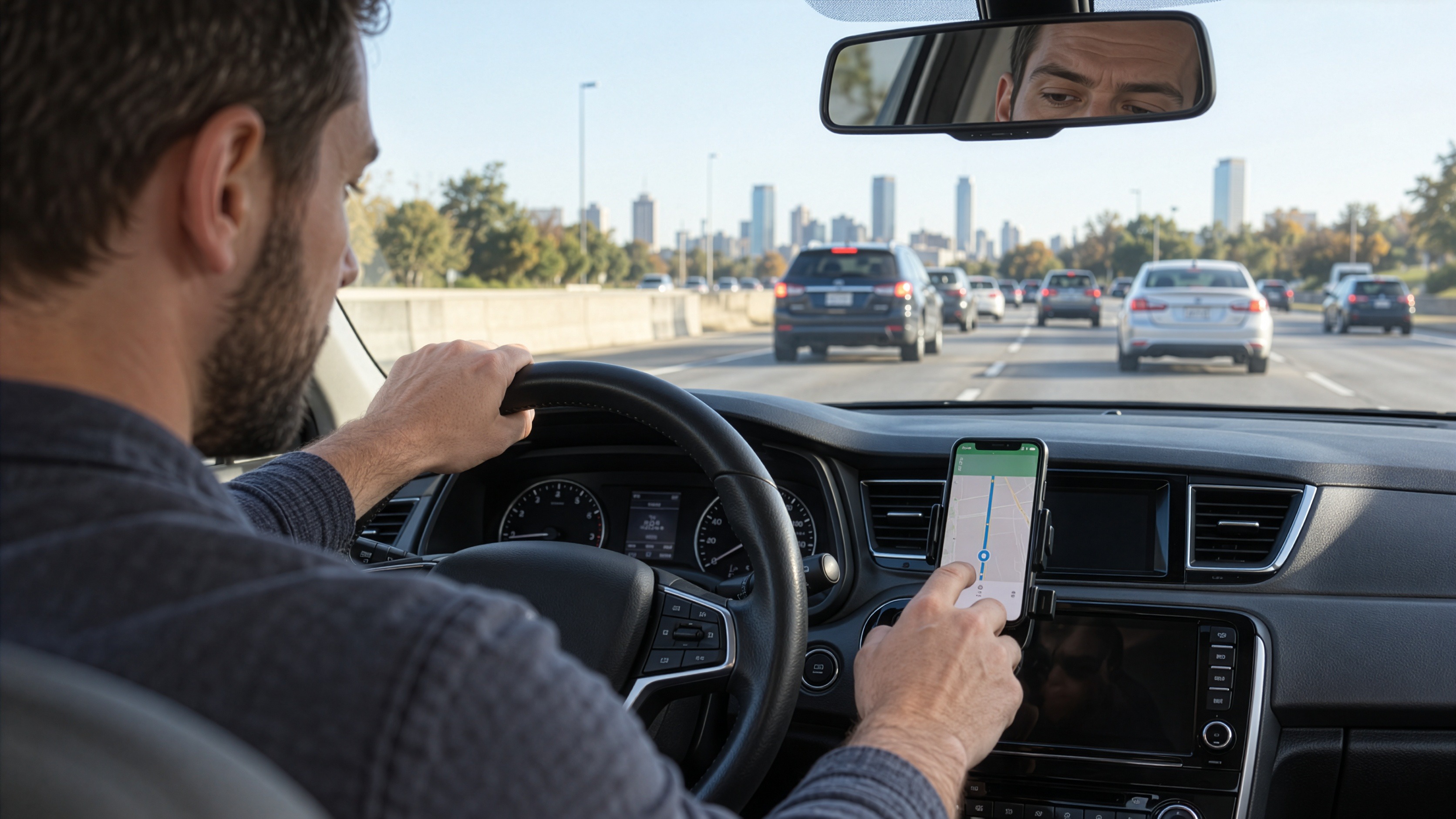
Most people hear the words distracted driving and immediately think about texting.
Texting is certainly one of the most dangerous distractions behind the wheel, but it is far from the only one.
Drivers can become distracted by:
- navigation systems,
- music controls,
- food and drinks,
- passengers,
- children in the back seat,
- objects falling on the floor,
- roadside activity,
- or simply thinking about something other than driving.
The problem is simple:
Driving safely requires your eyes, hands, and attention at the same time.
There Are Different Types of Distraction
Distracted driving is usually divided into three broad categories.
Visual distraction happens when you take your eyes off the road.
Manual distraction happens when you take one or both hands away from driving tasks.
Cognitive distraction happens when your mind is focused on something other than the road.
Some activities involve all three.
Texting is a good example because you may look at the phone, hold or type on it, and think about the message instead of traffic around you.
A Few Seconds Is Longer Than It Feels
Drivers sometimes believe that looking away for a second or two is harmless.
But at highway speeds, your vehicle can travel a significant distance while your eyes are somewhere else.
During that time:
- traffic ahead can stop,
- a vehicle can change lanes,
- an animal can enter the roadway,
- a pedestrian can appear,
- or debris can fall into your lane.
By the time you look back up, the situation may already have changed.
Navigation Can Be Distracting Too
GPS navigation is extremely useful, but it can become dangerous when drivers try to operate it while moving.
Typing an address, searching for a destination, zooming the map, or changing a route can take your attention away from traffic.
A better habit is to enter the destination before you start driving.
If you need to make a major change, pull over somewhere safe instead of trying to solve it while moving.
Eating Behind the Wheel Can Be a Bigger Distraction Than It Seems
Holding a sandwich, opening packaging, reaching for a drink, or cleaning up a spill may seem routine.
But each of those actions takes attention away from driving.
A dropped drink can create an especially dangerous reaction.
The natural instinct is to look down and grab it.
On the road, that instinct can be more dangerous than the spill itself.
If something falls, let it fall.
Deal with it after you stop.
Passengers Can Help or Hurt
Passengers are not automatically a distraction.
In fact, a passenger can sometimes help by:
- handling navigation,
- answering a phone call,
- adjusting music,
- or looking up information.
But intense conversations, arguments, or constant interaction can pull the driver's attention away from the road.
The driver needs to remain responsible for deciding when a conversation or activity is becoming too distracting.
Children Can Create Unexpected Distractions
Parents and caregivers may face a different challenge.
A child may:
- cry,
- drop something,
- need help with a seat belt,
- fight with another child,
- or ask for attention.
The temptation is to turn around or reach into the back seat.
If the situation requires more than a quick verbal response, the safer choice is usually to pull over somewhere appropriate.
Looking at a Crash Can Cause Another Crash
Roadside incidents attract attention.
Drivers naturally want to see what happened.
But staring at a crash, emergency vehicles, construction activity, or something unusual beside the road can cause drivers to slow unexpectedly or drift from their lane.
This behavior is often called rubbernecking.
The result can be additional congestion or even another collision.
Pay attention to the lane ahead of you, not the event beside you.
Large Trucks Make Distraction Even More Dangerous
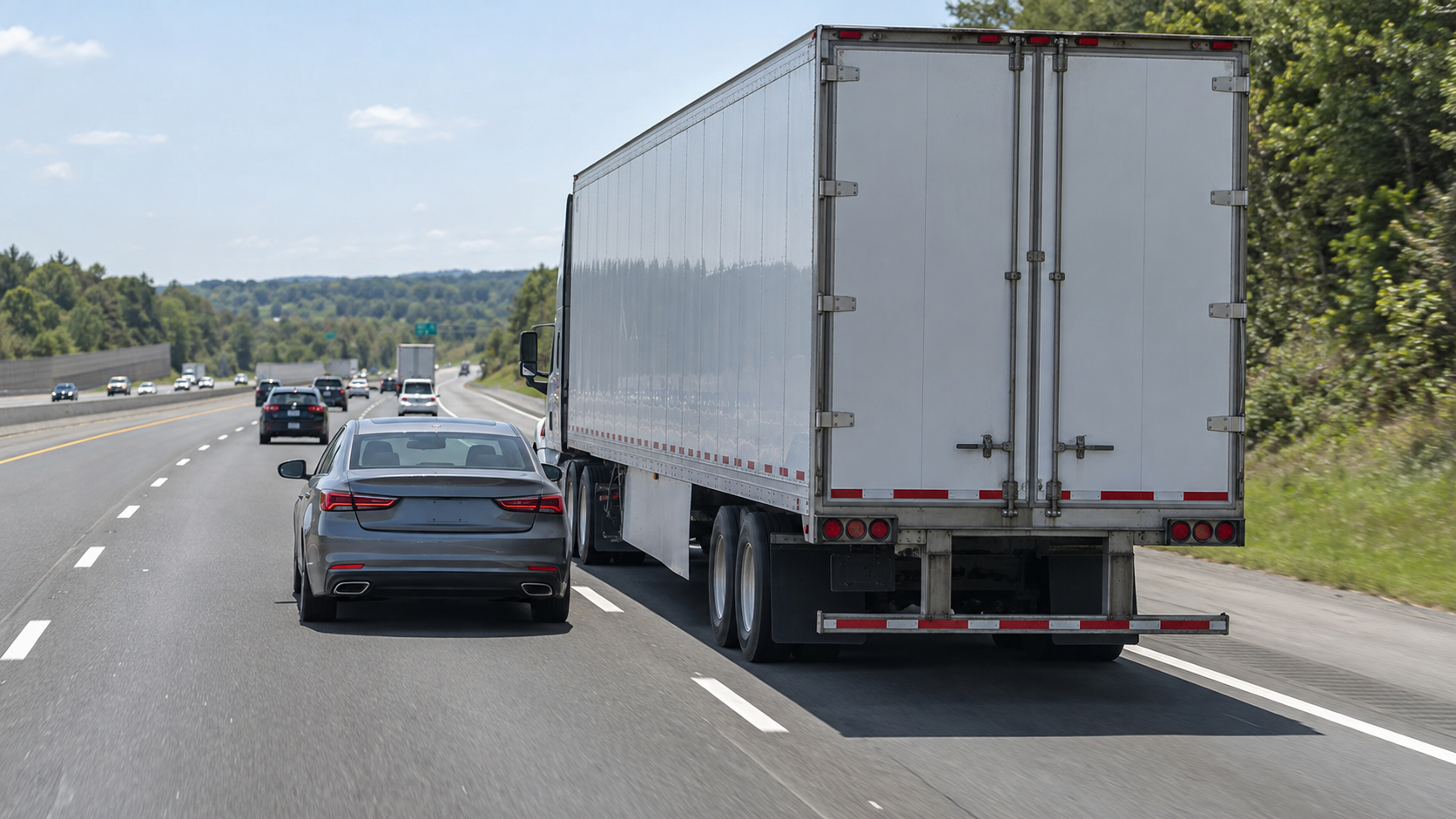
Distracted driving becomes especially risky around tractor-trailers and other large vehicles.
Large trucks have bigger blind spots, require more space to stop, and may need more room to change lanes or turn.
If you are driving beside a truck while looking at a phone, navigation screen, or something inside the vehicle, you may miss an important movement by the truck.
This is another reason to avoid lingering beside an 18-wheeler unnecessarily.
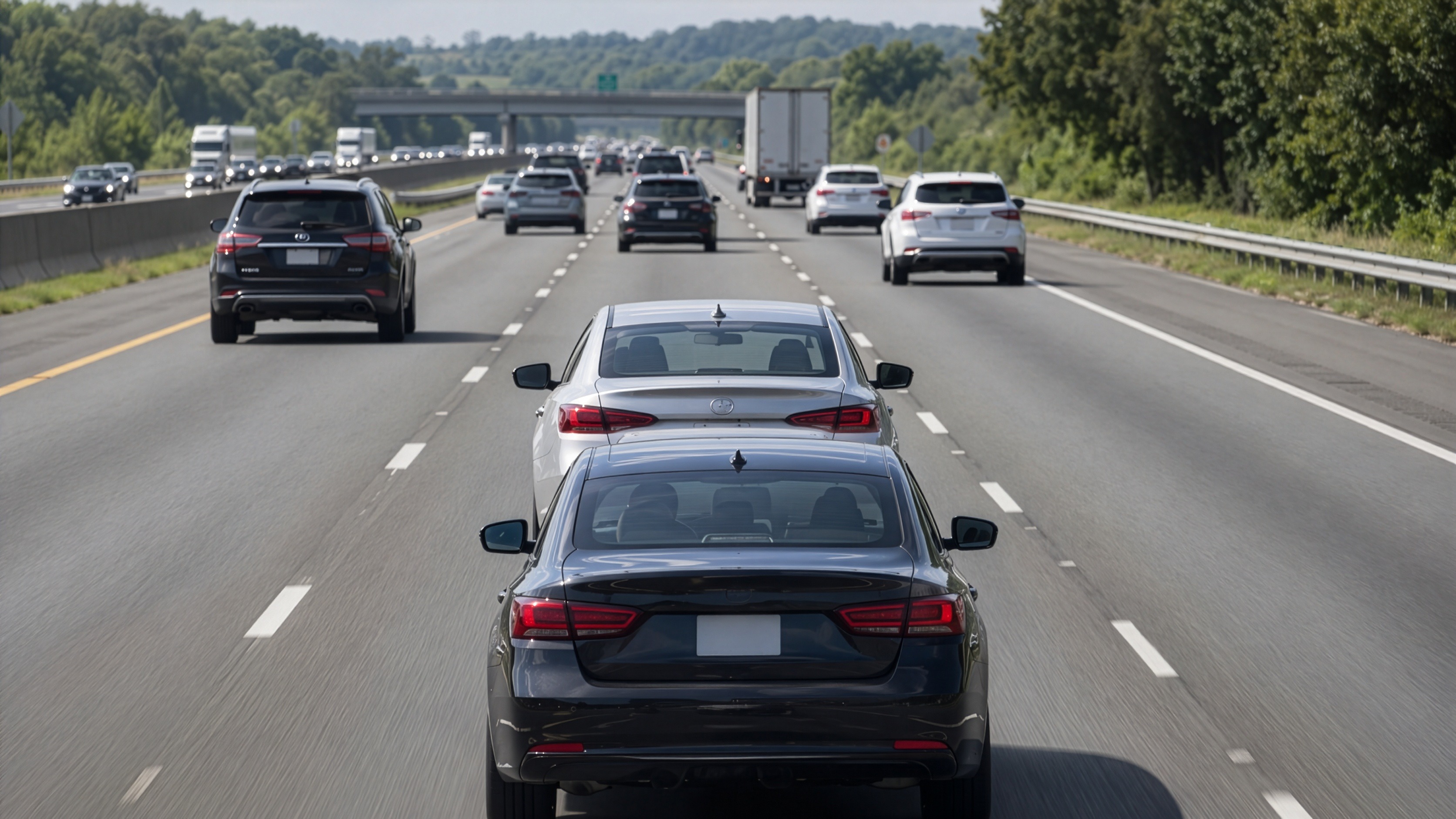
Traffic Can Stop Without Warning
One of the most common consequences of distraction is failing to notice that traffic ahead is slowing down.
This can happen on:
- highways,
- busy city streets,
- construction zones,
- school zones,
- and even residential roads.
If your eyes are down when brake lights appear ahead, you lose valuable reaction time.
The driver behind you may also have less time to react if you brake suddenly.
Hands-Free Does Not Mean Distraction-Free
Using a hands-free system may reduce the need to hold a device, but it does not eliminate cognitive distraction.
A complicated phone conversation can still occupy your attention.
You may technically be looking at the road while mentally processing something completely unrelated to driving.
That is why the safest approach is not simply to keep your hands free.
It is to keep your attention focused on the road.
What About Changing Music?
Adjusting the radio or choosing a song may seem minor, but searching through menus can take your eyes away from traffic for too long.
If your vehicle has steering-wheel controls or voice controls, those may reduce the amount of time you need to look away.
Better yet, set up your music before the trip begins.
Do Not Reach for Something While Driving
If your phone, wallet, bottle, sunglasses, or another object falls onto the floor, do not reach down while the vehicle is moving.
Reaching can cause you to:
- look away from the road,
- move the steering wheel unintentionally,
- lose awareness of surrounding traffic,
- or shift your body into a poor driving position.
Wait until you can stop safely.
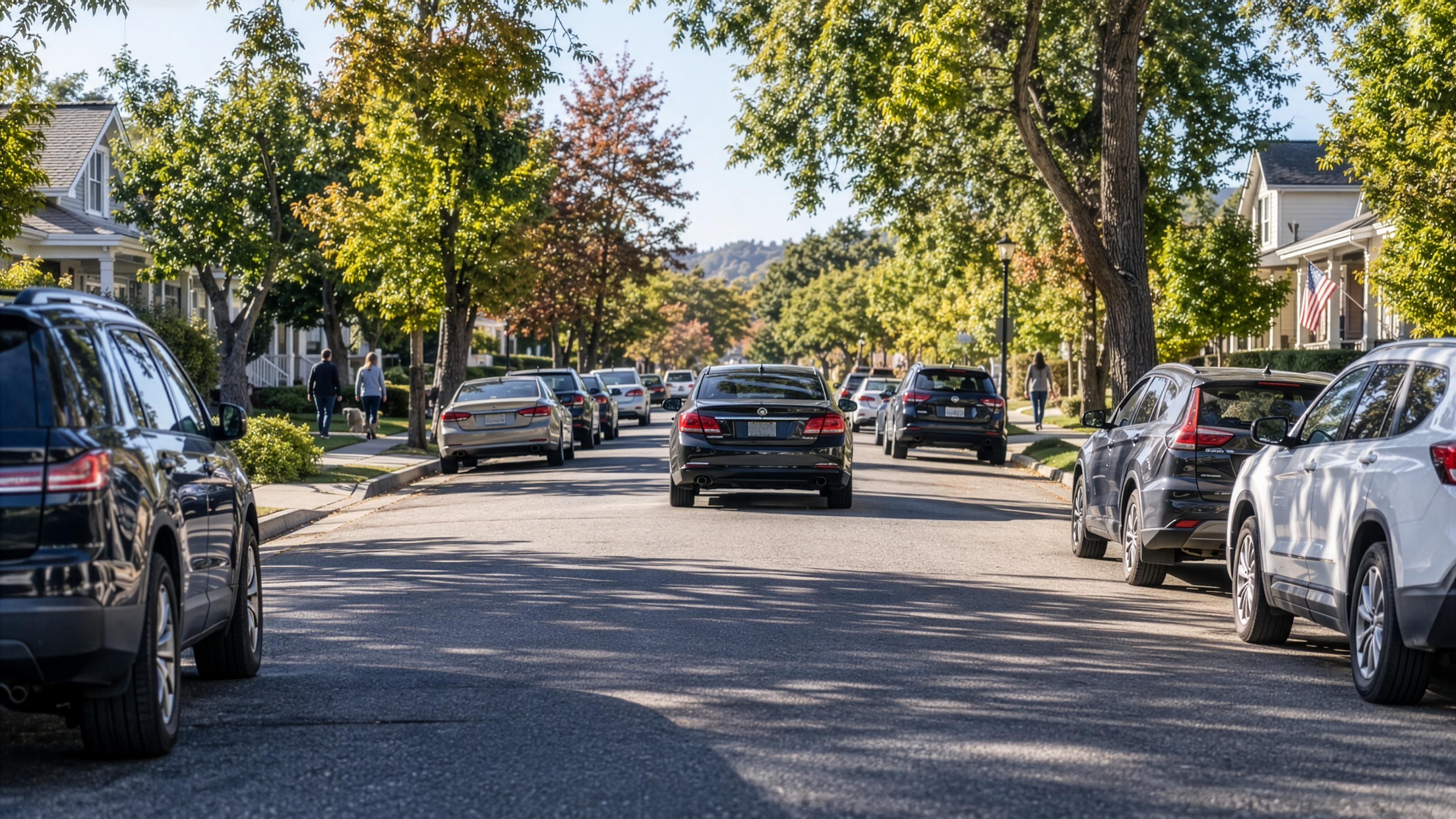
Distraction Is Not Only a Highway Problem
Drivers sometimes believe distraction is less serious at lower speeds.
But neighborhoods and parking lots contain hazards that can appear suddenly.
A child can run into the street.
A pedestrian can step out from between parked cars.
A vehicle can back out of a driveway.
At lower speeds, you may have more time to react, but only if you are actually watching the road.
How to Reduce Distraction Before You Start Driving
A few simple habits can eliminate many distractions before the vehicle begins moving.
- Set your navigation before leaving.
- Choose your music or playlist.
- Secure loose items.
- Put your phone somewhere you will not constantly check it.
- Adjust mirrors and climate controls.
- Make sure children and passengers are settled.
Preparing before you move is much easier than trying to manage everything while driving.
If Something Needs Your Attention, Pull Over
There is a simple rule that applies to almost every distraction.
If something requires enough attention that you cannot safely drive at the same time, stop driving first.
Find a safe place to pull over, handle the situation, and then continue.
Arriving a few minutes later is better than trying to solve a problem while traveling down the road.
The Bottom Line
Distracted driving is not limited to texting.
Anything that takes your eyes, hands, or attention away from driving can create a dangerous situation.
The safest drivers are not simply the ones who avoid their phones.
They are the ones who recognize when something else is competing for their attention and choose to deal with it later.
The road can change in seconds. Make sure you are looking when it does.
Comments
No comments yet. Be the first to join the discussion.
Leave a Comment
Your email will not be displayed publicly. Comments are reviewed before publication.