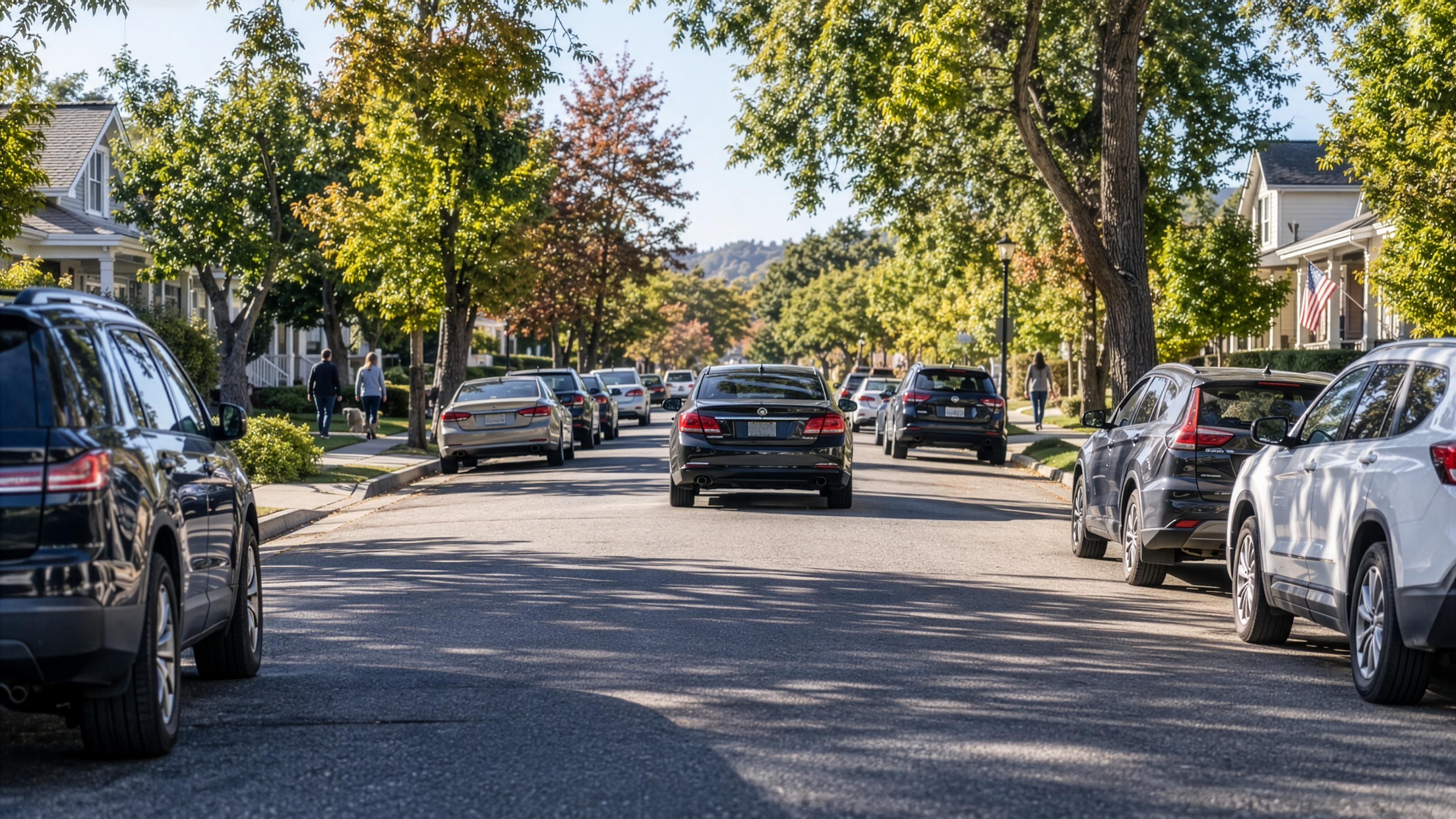
On a highway, the difference between 55 and 60 mph may not feel dramatic.
On a residential street, the difference between 25 and 35 mph can matter a lot more.
Neighborhood roads are full of hazards that can appear suddenly:
- children running between parked cars,
- people walking dogs,
- cyclists,
- cars backing out of driveways,
- delivery vehicles stopping unexpectedly,
- and drivers pulling away from the curb.
That is why even a relatively small increase in speed can make a residential street much less forgiving.
Speed Changes How Much Time You Have to React
When something unexpected happens, your vehicle does not begin stopping the instant you see the hazard.
First, you have to recognize what is happening.
Then you react.
Then the vehicle begins braking.
The faster you are traveling, the farther the vehicle moves during each of those steps.
That means a driver traveling 5 or 10 mph faster has less time to recognize a pedestrian, child, bicycle, or vehicle entering the roadway.
Residential Streets Have More Hidden Hazards
Neighborhood roads often have limited visibility.
Parked vehicles can hide:
- children,
- pets,
- pedestrians,
- bicycles,
- and cars pulling out of driveways.
A driver may not see the hazard until it is already very close.
That is why speed matters so much in areas where your line of sight is constantly being interrupted.
Parked Cars Create Blind Spots
Rows of parked vehicles can turn an ordinary street into a series of visual blind spots.
A child may step into the street from between two SUVs.
A person may walk out from behind a van.
A driver may open a door into the roadway.
A car may begin backing out before the approaching driver notices it.
At lower speeds, you have more time to respond to these surprises.
Driveways Are Easy to Underestimate
Residential streets may have dozens of driveways in a very short distance.
Each one is a potential conflict point.
A vehicle may:
- back into the street,
- pull forward without a clear view,
- be hidden behind landscaping,
- or begin moving just as you approach.
The faster you are traveling, the less time either driver has to recognize the problem.
Children Are Especially Unpredictable
Adults generally understand traffic patterns and vehicle speeds.
Children may not.
A child chasing a ball, riding a bicycle, or running toward a friend may enter the street without carefully checking for traffic.
Drivers should never assume a child near the roadway will behave predictably.
Slower speed gives you more time to recognize that movement and react.
Five Miles Per Hour Does Not Feel Like Much
This is one reason speeding in neighborhoods is easy to rationalize.
A driver may think:
“I’m only going 30 in a 25.”
Or:
“I’m only doing 35.”
Inside the vehicle, that difference may barely feel noticeable.
But outside the vehicle, the extra speed means:
- less reaction time,
- more distance traveled before braking begins,
- longer stopping distance,
- and more energy involved if a collision occurs.
The issue is not whether 5 mph feels fast.
The issue is what happens when something unexpected appears in front of you.
Stopping Distance Is Not Just About Brakes
Drivers sometimes think a modern vehicle can stop quickly enough because it has good brakes, anti-lock braking, and electronic safety systems.
Those systems help, but they cannot eliminate reaction time.
If you do not see the hazard immediately, the vehicle continues traveling before braking even starts.
And once braking begins, speed still affects how much roadway is needed to stop.
Residential Speed Limits Are Usually Lower for a Reason
Neighborhood speed limits are not simply designed to make drivers take longer to get home.
They reflect the environment.
Residential areas typically have more:
- pedestrians,
- driveways,
- intersections,
- parked vehicles,
- children,
- cyclists,
- and unpredictable movement close to the roadway.
The lower speed gives drivers more time to deal with those conditions.
What If the Street Is Completely Empty?
An empty-looking neighborhood can create a false sense of security.
You may not see anyone on the sidewalk or any cars moving.
But the hazards that matter are often the ones you cannot see yet.
A vehicle can back out of a driveway.
A dog can run through an open gate.
A child can appear between parked cars.
A pedestrian can step from behind a large vehicle.
The fact that the street looked empty two seconds ago does not mean it will stay empty.
School Zones and Residential Streets Are Different, but Related
School zones often have even lower speed limits during certain times because of the concentration of children and pedestrians.
Residential areas may not always have the same signs or flashing lights, but many of the same risks are present.
Children may be walking to school, waiting for a bus, riding bicycles, or playing near the roadway.
Drivers should adjust their speed based not only on the posted limit, but also on what is happening around them.
Weather Makes the Problem Worse
Rain, snow, darkness, fog, and glare all reduce the amount of time a driver has to recognize a hazard.
In those conditions, even the posted speed limit may be too fast for the situation.
A residential street that feels comfortable at 25 mph on a clear afternoon may require a slower speed at night or during heavy rain.
Speeding Usually Saves Less Time Than Drivers Think
On a short neighborhood street, driving 5 or 10 mph faster usually saves very little time.
Stop signs, traffic lights, intersections, turns, and other vehicles often eliminate most of the time gained anyway.
You may arrive at the same red light as the driver you passed a block earlier.
That small time savings is rarely worth reducing your margin for error in an area where unexpected hazards are common.
Watch for Your Own Speed
Residential speeding is not always intentional.
Drivers can gradually accelerate without realizing it, especially on:
- wide neighborhood roads,
- downhill streets,
- long straight sections,
- or roads with very little traffic.
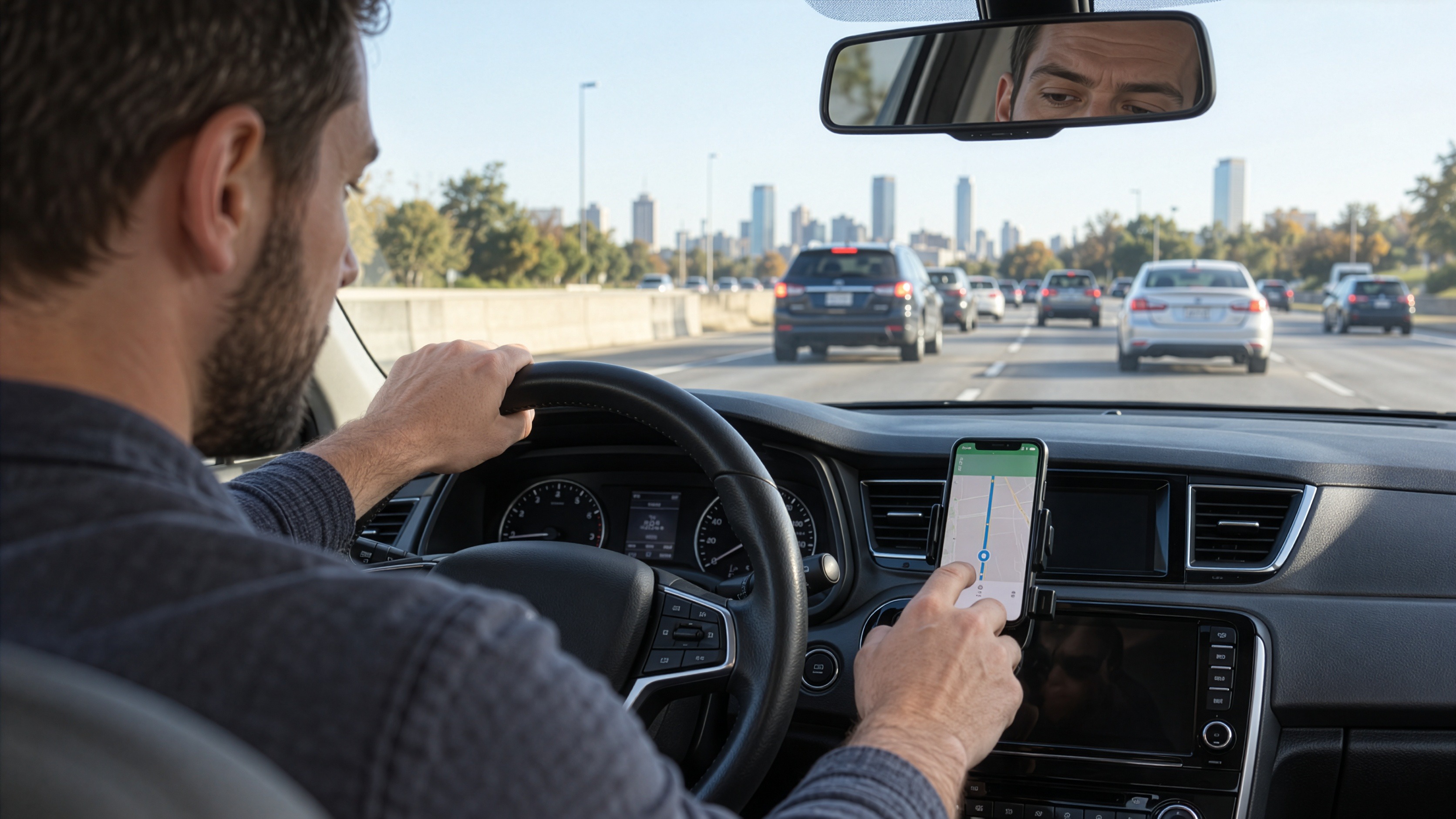
Glancing at your speedometer occasionally can help prevent that slow creep upward.
What Should You Do When Someone Is Following Closely?
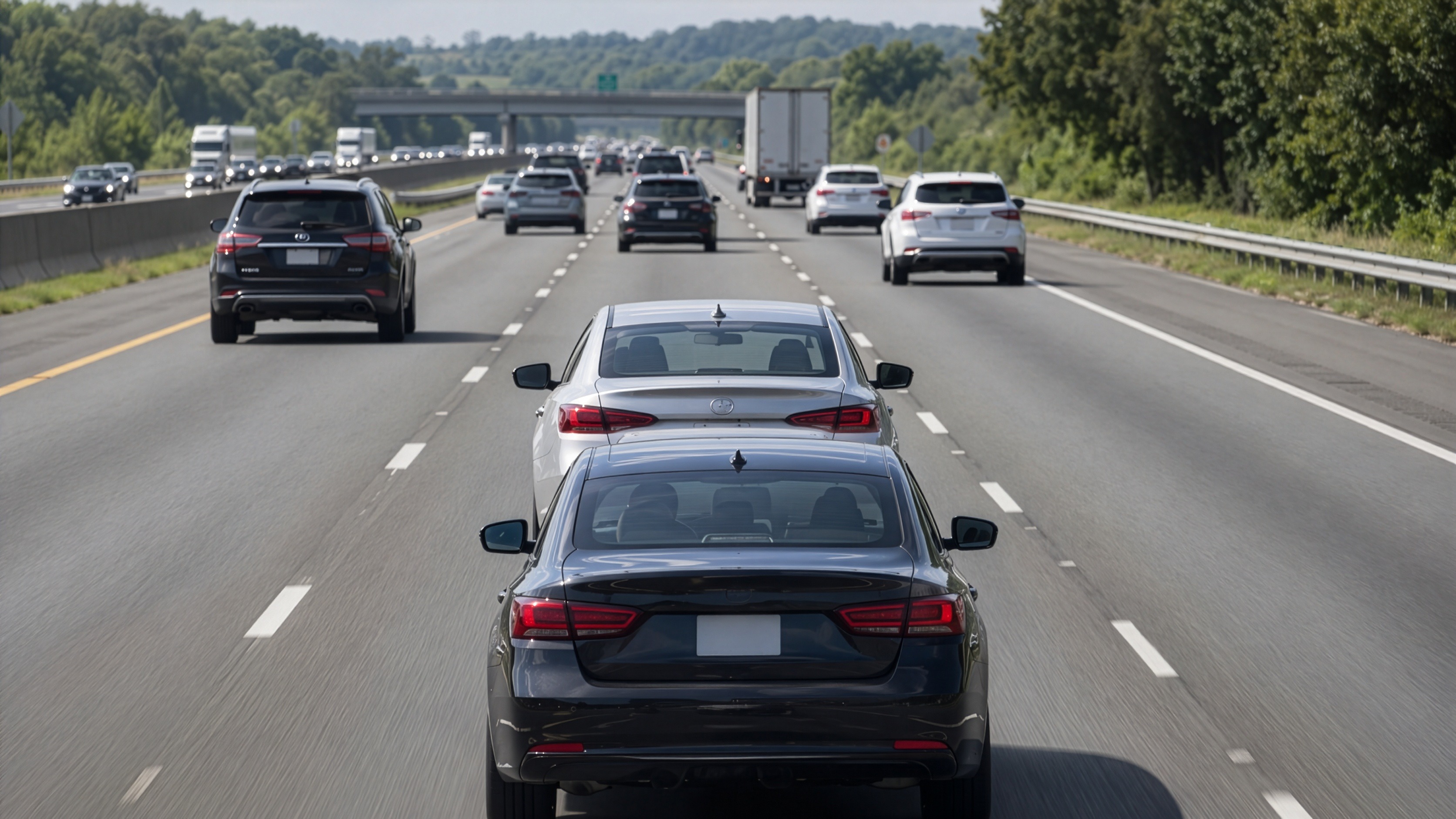
A driver behind you may become impatient because you are following the residential speed limit.
That does not mean you should increase your speed simply to satisfy them.
Maintain a safe, predictable speed.
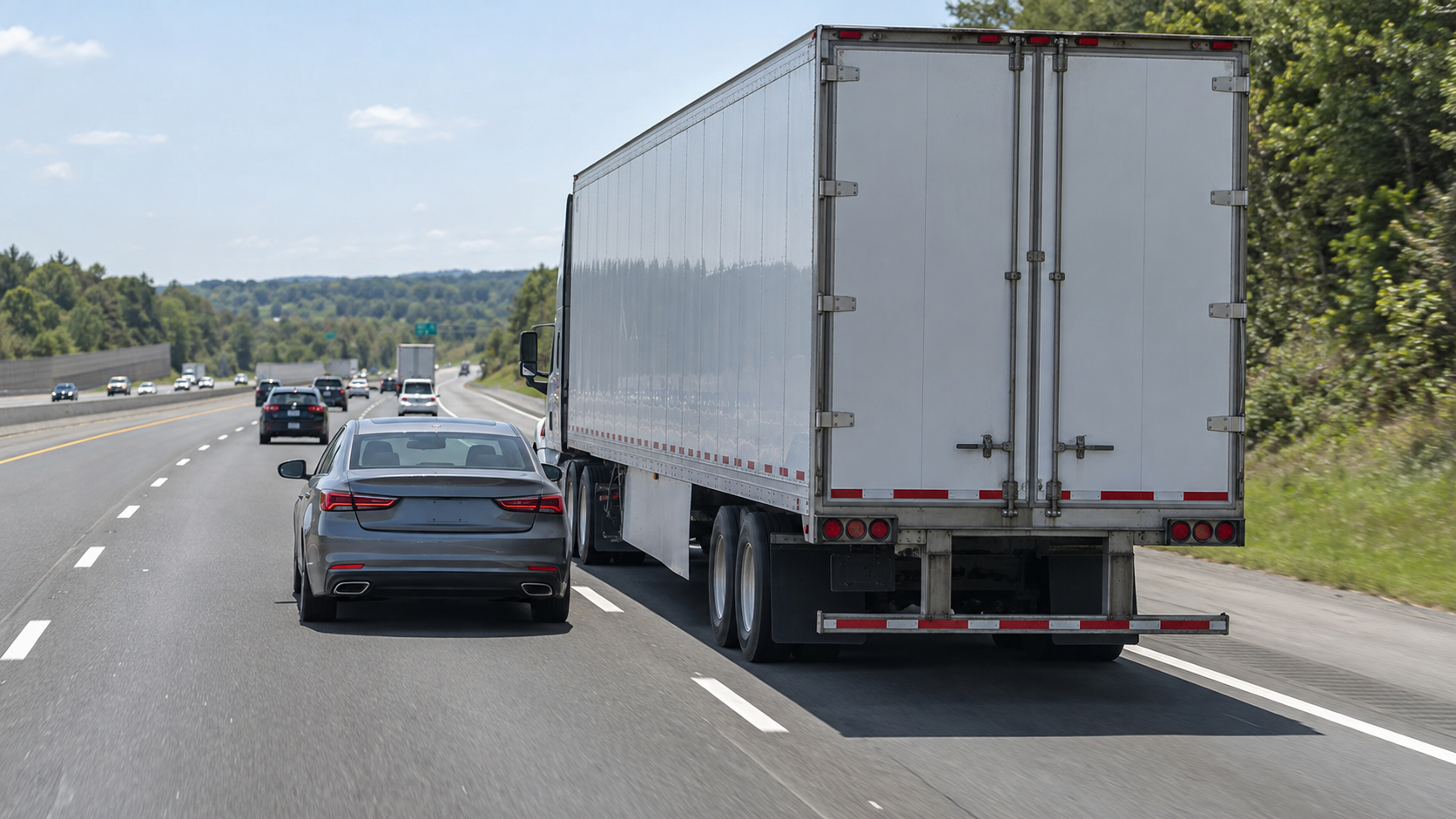
If there is a safe and legal opportunity to let an aggressive driver pass, you can do so, but do not allow pressure from behind to make you drive faster than conditions safely allow.
The Bottom Line
Five or 10 mph may not sound like a major difference.
But residential streets are not controlled environments.
They are filled with driveways, pedestrians, parked vehicles, children, pets, intersections, and limited visibility.
The slower you are traveling, the more time you have to recognize a problem and respond to it.
And in a neighborhood, that extra second or two can matter far more than the few seconds you might save by driving faster.
Residential speed limits are not just numbers on signs. They are part of the safety margin between your vehicle and everything you may not see coming.
Comments
No comments yet. Be the first to join the discussion.
Leave a Comment
Your email will not be displayed publicly. Comments are reviewed before publication.