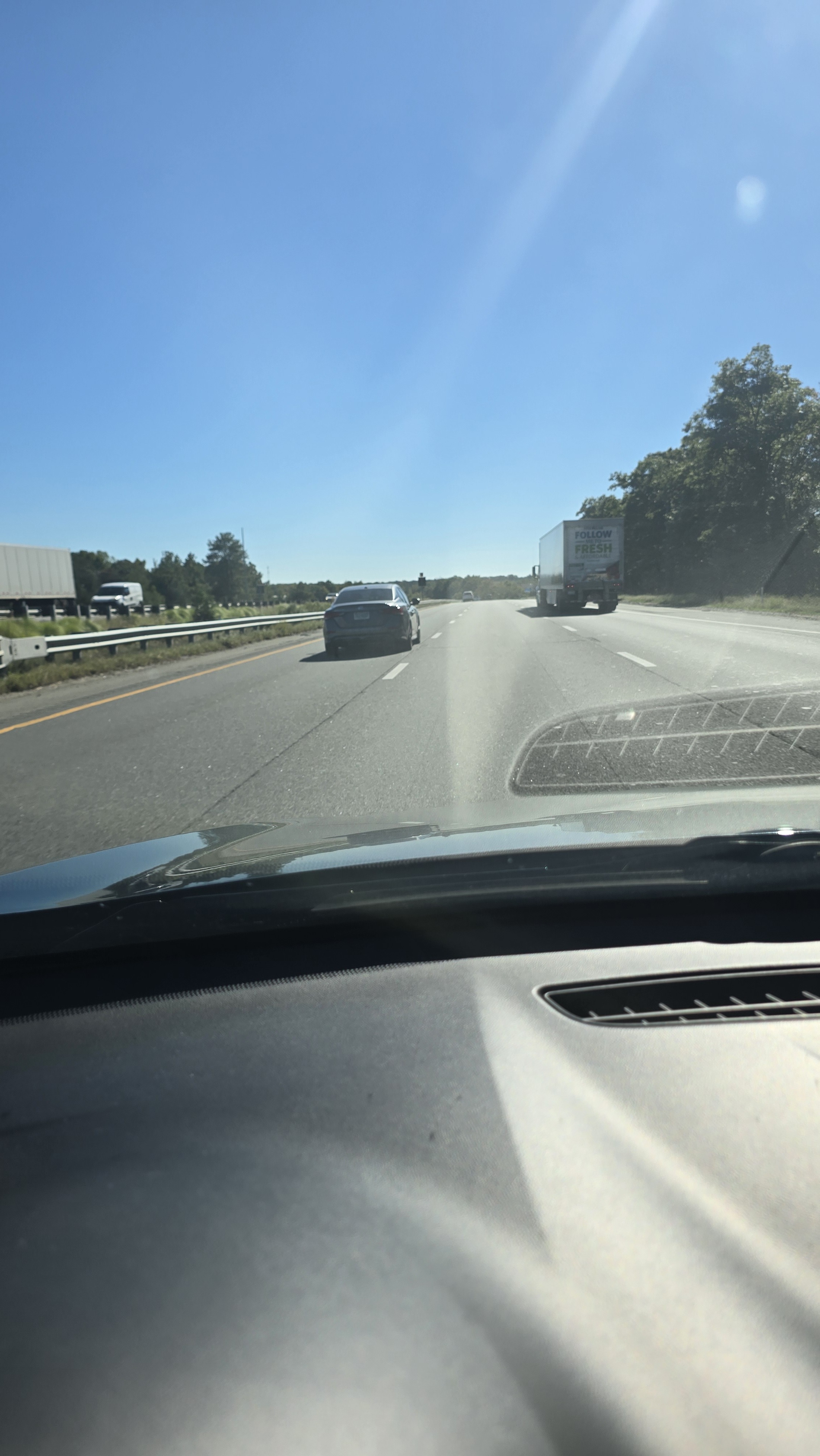
You are driving on a multi-lane highway when traffic in the left lane suddenly begins slowing down.
There is no accident. No construction. No obvious reason for the slowdown.
Then you see it: a vehicle traveling steadily in the left lane while a line of faster traffic builds behind it.
Few driving behaviors create more frustration than this, but why do people do it?
The answer is usually more complicated than simply saying they are inconsiderate. Drivers stay in the left lane for several different reasons, including misunderstanding lane rules, avoiding lane changes, following habits learned years ago, or simply not realizing what is happening behind them.
Some Drivers Think Every Lane Is Just Another Travel Lane
One of the biggest reasons people stay in the left lane is simple: they do not think of it as a passing lane.
To them, a highway with three lanes is simply a road with three available places to drive.
They may choose the left lane because there are fewer trucks, fewer vehicles entering from ramps, or fewer cars changing lanes around them.
Once they are comfortable there, they may remain in that lane for miles.
The problem is that highway lanes are not always intended to function identically. Depending on the state and roadway, drivers may be required or expected to keep right when they are not passing.
For a closer look at those rules, see Is the Left Lane Only for Passing?
They Are Already Driving the Speed Limit
This may be the most common explanation for left-lane disagreements.
A driver looks at the speedometer, sees that they are traveling at the posted speed limit, and thinks:
“I'm doing the speed limit. Nobody should need to pass me.”
That sounds logical at first, but it mixes together two separate issues: speed limits and lane usage.
Speed laws determine how fast a vehicle may legally travel. Lane-use laws determine where vehicles should travel and when drivers may need to move right.
A speeding driver may be violating the speed limit, but that does not necessarily mean another driver should remain in the left lane to prevent that vehicle from passing.
Drivers are generally better off concentrating on their own safe lane use rather than attempting to enforce another driver's speed.
Some Drivers Are Trying to Avoid Constant Lane Changes
There is also a practical reason some drivers choose the left lane.
The right lane can be busy.
Vehicles enter from ramps. Trucks may travel more slowly. Cars exit the highway. Traffic can repeatedly accelerate and slow down.
A driver may move left to pass one vehicle and then notice another slower vehicle farther ahead.
Instead of moving right and then left again, they decide to remain in the left lane.
This can be reasonable for a short period when a driver is actively passing several vehicles. The problem begins when the passing ends but the driver never returns to the right.
They May Not Realize Traffic Is Behind Them
Not every left-lane camper is deliberately blocking traffic.
Some drivers simply are not paying enough attention to what is happening behind them.
They may be focused almost entirely on the road ahead and rarely check their mirrors.
As a result, they may have no idea that several vehicles have accumulated behind them.
This is why situational awareness matters on highways. Good driving is not only about watching the vehicle directly in front of you. It also means understanding what traffic is doing beside and behind you.
They Feel Safer in the Left Lane
Some drivers genuinely feel more comfortable driving in the left lane.
The right lane often has:
- vehicles entering from on-ramps,
- vehicles slowing for exits,
- large trucks,
- more frequent lane changes,
- and sometimes rougher pavement.
The left lane can therefore feel calmer and more predictable.
The driver may not be intentionally interfering with anyone. They have simply chosen the lane that feels easiest to maintain.
Unfortunately, when that driver travels slower than surrounding traffic, their personal comfort can create congestion behind them.
Some Drivers Don't Want to Be “Pushed Around”
There is also a psychological element.
A vehicle approaches from behind. Instead of interpreting that as a signal that someone wants to pass, the driver in front may interpret it as pressure or aggression.
That can create a completely different reaction:
“I'm not moving just because this person wants me to.”
At that point, lane usage becomes personal.
The situation is no longer about traffic flow. It becomes a contest between two drivers who may never speak to each other.
That is where a minor traffic inconvenience can turn into tailgating, brake-checking, aggressive passing, or road rage.
Neither driver benefits from turning lane position into a confrontation.
Some Drivers Believe Moving Right Means Giving In to Speeders
A related belief is that moving right somehow rewards bad behavior.
If the vehicle behind is clearly exceeding the speed limit, the driver ahead may feel that moving over encourages speeding.
But civilian drivers are not responsible for controlling the speed of surrounding traffic.
Trying to slow another vehicle by remaining in its path can create more conflict and may cause that driver to make an unsafe pass elsewhere.
The safer approach is usually predictable driving: complete your pass, return right when appropriate, and allow law enforcement to deal with speeding violations.
They Learned Different Driving Habits
Drivers also come from different places and learned under different conditions.
Someone who learned to drive primarily in dense urban traffic may think about lanes differently from someone accustomed to long rural interstate trips.
In heavy city traffic, every lane may be continuously occupied and traditional passing-lane behavior may be less obvious.
That same driver may carry those habits onto an open interstate without realizing that lane discipline works differently when traffic is moving freely.
Why Does Left-Lane Camping Affect Traffic?
The problem is larger than simply making one driver slow down.
When a slower vehicle occupies the left lane next to another vehicle traveling at nearly the same speed, faster traffic begins collecting behind them.
Drivers then start searching for another path around the obstruction.
That can lead to:
- more lane changes,
- passing on the right,
- drivers following too closely,
- sudden braking,
- larger differences in speed between adjacent lanes,
- and growing frustration.
A single vehicle does not necessarily create a traffic jam by itself, but disrupting the normal passing pattern can cause small disturbances to spread through traffic behind it.
Why Doesn't Everyone Just Pass on the Right?
Sometimes they do.
But forcing faster traffic to repeatedly move right to pass changes the normal traffic pattern.
Vehicles may have to cross multiple lanes, interact with merging traffic, or squeeze into smaller openings.
Whether passing on the right is legal also depends on the roadway and the state.
Good lane discipline reduces the need for those extra maneuvers in the first place.
Does the Left Lane Always Have to Stay Empty?
No.
The left lane exists to be used.
Drivers may need it to pass slower traffic, avoid hazards, follow a left-side route, prepare for certain exits or turns, or respond to roadway conditions.
And when traffic becomes heavily congested, every lane may naturally fill.
The real issue is not simply whether someone is physically driving in the left lane.
The issue is unnecessarily remaining there while not passing and while preventing other traffic from using the lane as intended.
What If You Are Passing Several Vehicles?
You do not need to move right between every single vehicle when doing so would require constant weaving.
If you are continuing to overtake a reasonably close group of slower vehicles, staying in the passing lane until you have completed the pass may make sense.
But there is a difference between actively passing traffic and remaining in the left lane because another slower vehicle might appear half a mile ahead.
Once there is a reasonable opening and you are no longer passing, moving right restores the normal flow of the roadway.
What Should You Do When Someone Approaches From Behind?
First, don't panic and don't take it personally.
If you are in the left lane and actively passing another vehicle, finish the pass safely.
Do not cut dangerously close to the vehicle you just passed merely because someone is behind you.
When there is a safe opening in the right lane, signal and move over if appropriate.
If the approaching driver is speeding, tailgating, or behaving aggressively, avoid turning the situation into a confrontation. Do not brake-check them, intentionally block them, or increase your speed simply to prevent them from passing.
Creating distance from an aggressive driver is usually better than trying to teach that driver a lesson.
Left-Lane Laws Are Not the Same Everywhere
There is no single left-lane rule that applies identically across all 50 states.
Some states strongly emphasize keeping right except to pass. Others focus on slower traffic keeping right, while some require drivers to yield the left lane when another vehicle approaches from behind.
There may also be exceptions involving congestion, construction, emergency vehicles, left exits, road hazards, or particular types of vehicles.
That is why we are building a state-by-state guide based on the actual laws rather than assuming the same rule applies everywhere.
See Left Lane Laws by State to check the rules where you drive.
The Bigger Issue Is Predictability
Good highway driving is largely about being predictable.
If slower traffic generally stays right and passing traffic generally uses the left, everyone has a better idea of what surrounding vehicles are likely to do.
Problems increase when drivers begin creating their own rules:
- “I'm doing the speed limit, so I'm staying here.”
- “I'm going faster, so everyone has to move immediately.”
- “This lane feels easier, so I'll use it for the next 20 miles.”
- “That driver is speeding, so I'm going to stop them.”
None of those attitudes improve traffic.
A better approach is simple: pay attention to surrounding traffic, use the passing lane appropriately, avoid unnecessary confrontation, and move right when it is safe and appropriate to do so.
So Why Do People Drive Slowly in the Left Lane?
Usually there isn't one reason.
Some drivers misunderstand the purpose of the lane. Some believe traveling at the speed limit gives them a reason to stay there. Some want to avoid merging traffic. Others simply aren't checking their mirrors.
And occasionally, yes, someone knows traffic is behind them and chooses not to move.
Understanding why it happens does not make left-lane camping less frustrating, but it does show why education and better lane awareness may be more useful than anger.
The road works better when drivers cooperate rather than compete for position.
Comments
No comments yet. Be the first to join the discussion.
Leave a Comment
Your email will not be displayed publicly. Comments are reviewed before publication.